WORKSHOP
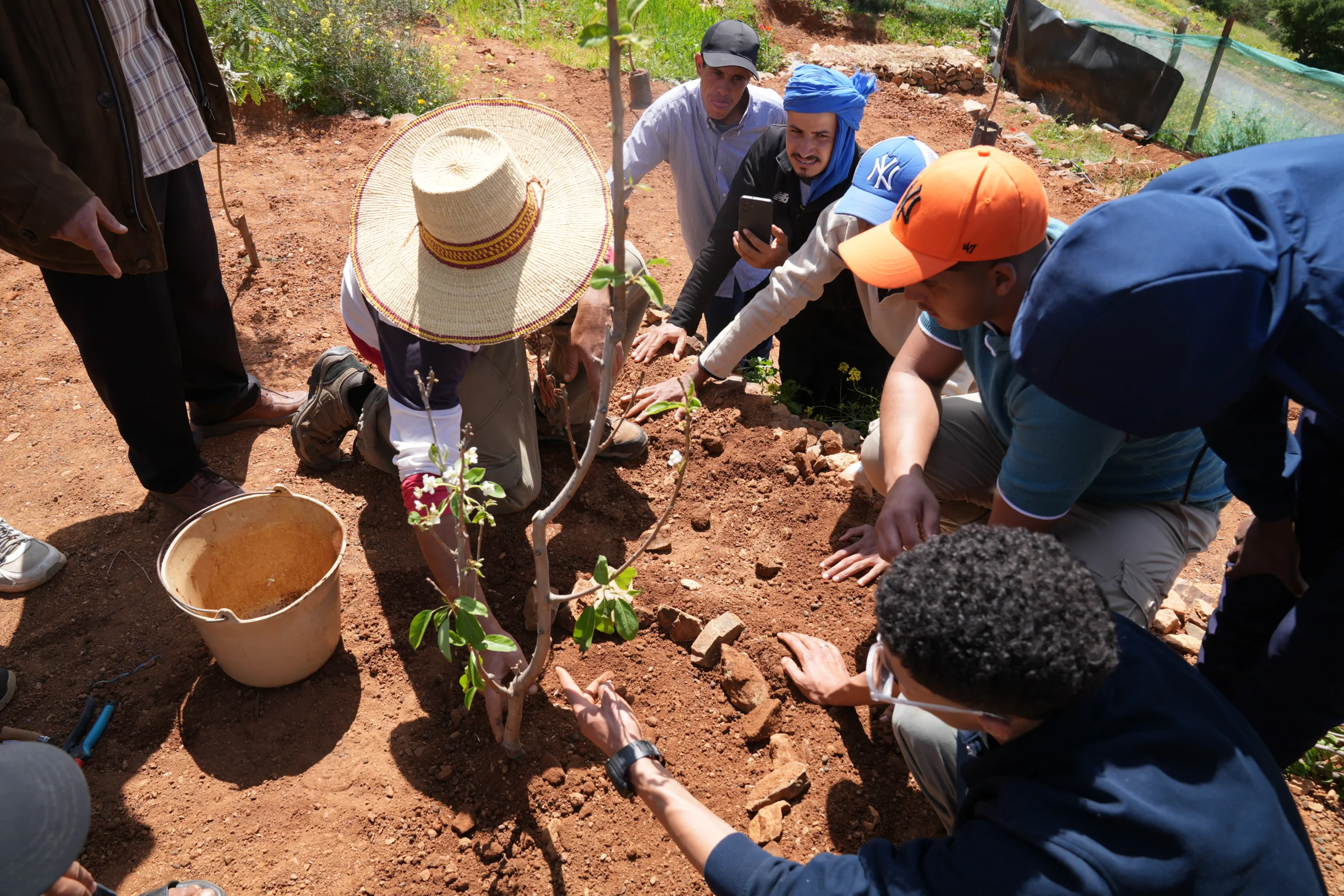
A workshop can bring new techniques.
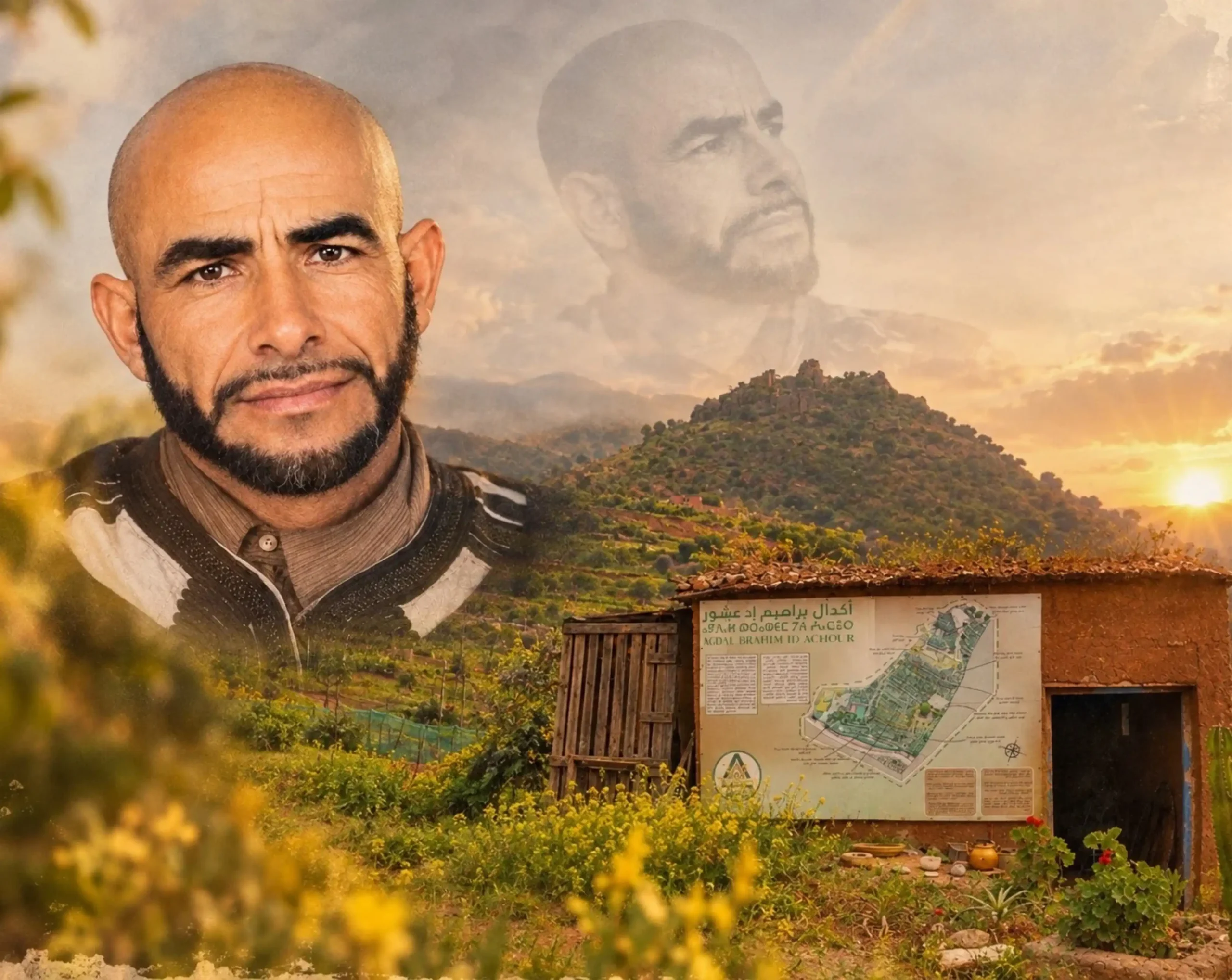
It came to Dar Si Hmad as a bequest from the heirs of late Mr. Brahim Aachour, whose name the land still carries.
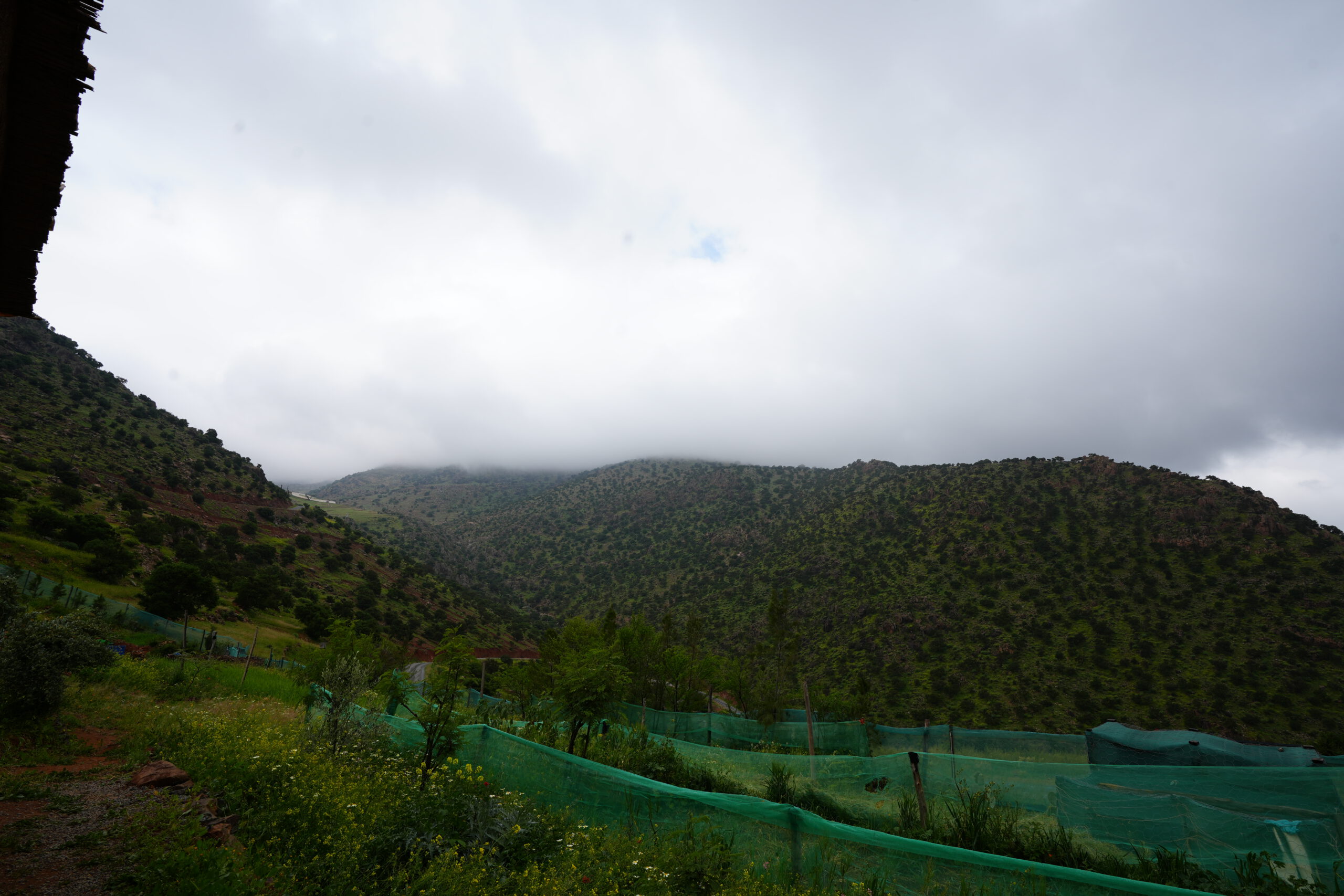
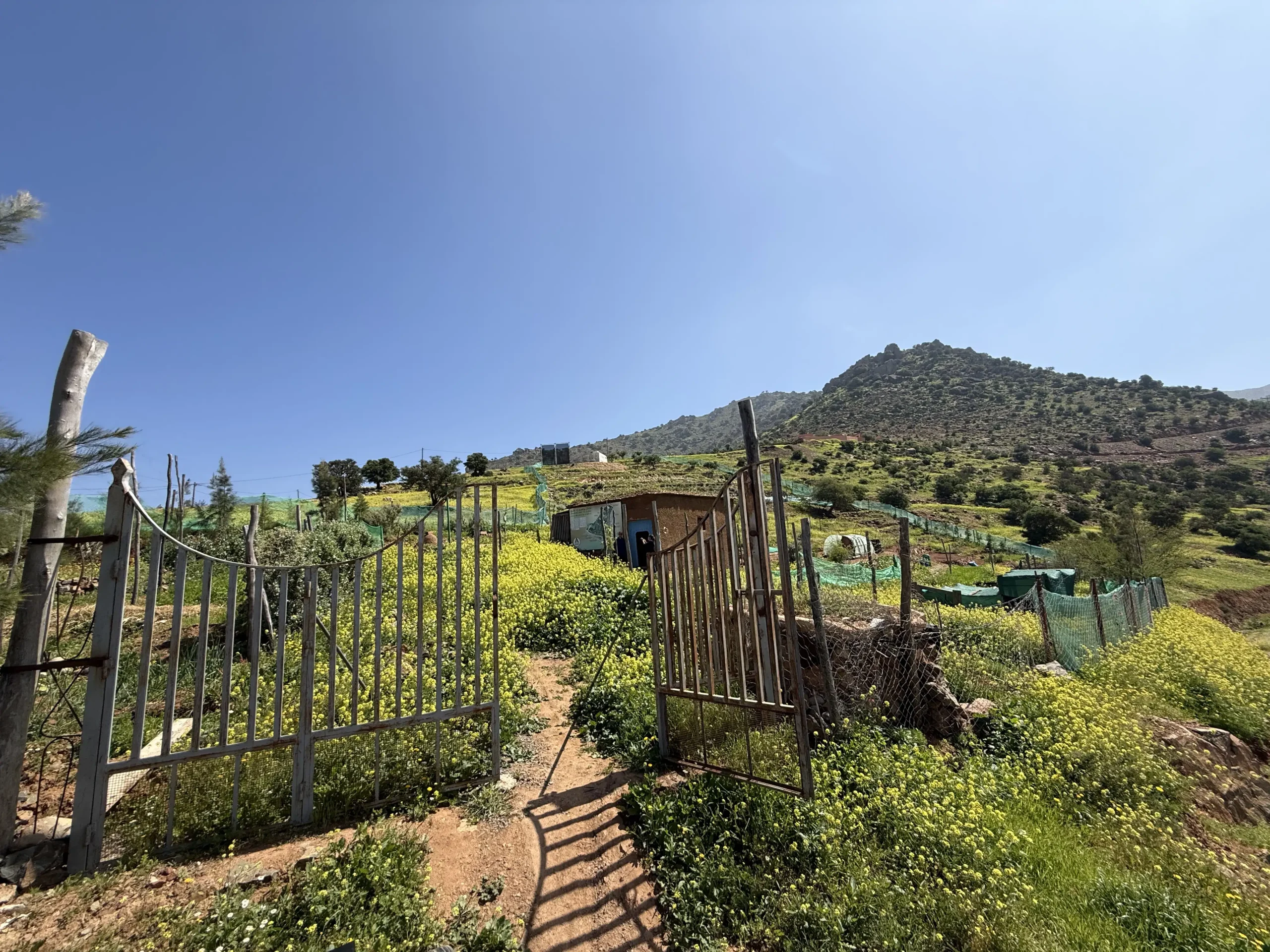
Today, on this steep, windy and water-scarce terrain in the Anti-Atlas, we are exploring what becomes possible when we work with what the landscape gives us — fog, soil, seeds, trees, knowledge and time.
The starting point of Agdal Brahim Aachour was not abundance, but scarcity.
In Amazigh, Agdal evokes protected, sacred grounds — land held in care for what it can sustain. The name feels fitting for a place where we are asking what might still be possible on difficult ground.
Since the 1980s, increasing dryness, economic hardship and massive migration from the Anti-Atlas have profoundly transformed rural life. For generations, these Amazigh territories were among the strongholds of ancestral agricultural and ecological knowledge. As people left, much of this knowledge risked becoming disconnected from the land that had sustained it.
This particular piece of land lay barren for more than twenty years before it was bequeathed to Dar Si Hmad by the heirs of Brahim Aachour.
We chose to see the land not only for what it had lost, but for what might still be possible.
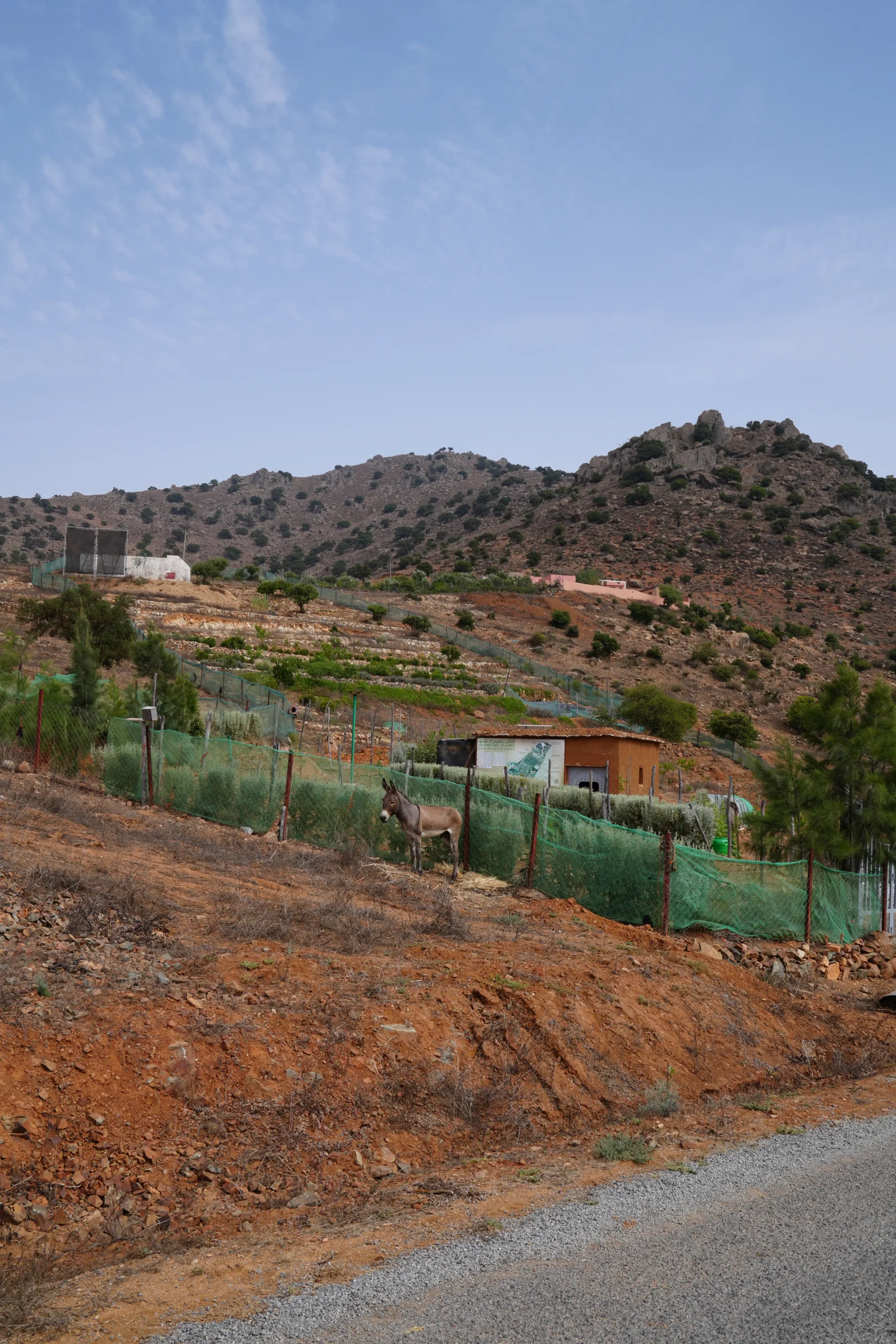
With fog water, terraces, soil restoration, seeds, trees and observation, ABA became a place to explore how a difficult landscape might become productive again — not by ignoring its limits, but by working with them.
We do not have all the answers. Some things work; others do not. We observe, learn and try again.
For Dar Si Hmad, possibility means creating another path in the face of mounting dryness and loss of hope.
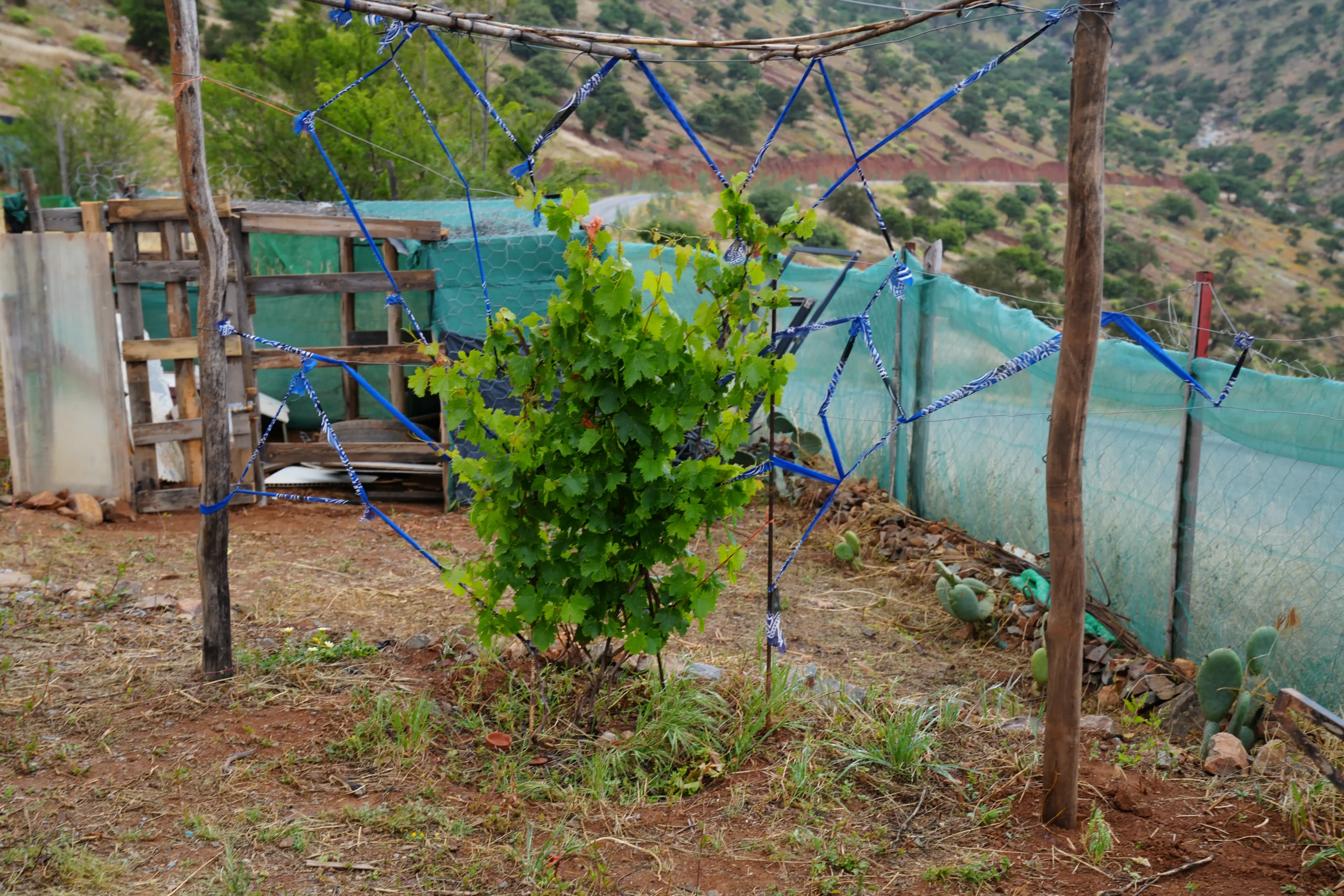
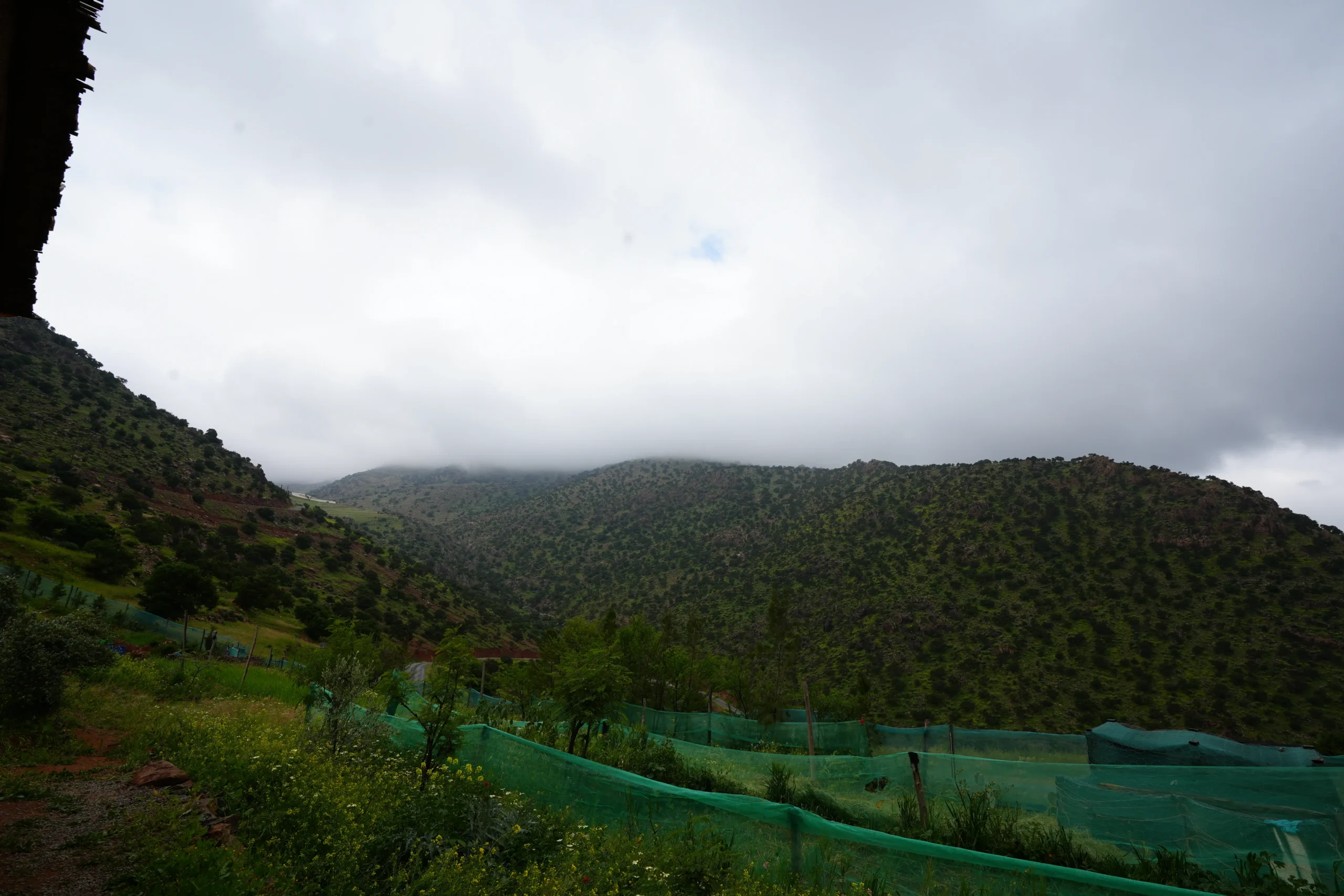
The slopes are steep. The soil is heavy and clay-rich. Wind is a constant force. Water is scarce, and years of erosion and abandonment have left their mark.
There was no blank canvas here, waiting to be turned into a farm.
There were terraces to understand and repair, soil to protect, water to channel, and vegetation to re-establish.
So we began with the landscape itself.
Each intervention is small on its own. Together, they begin to change the conditions under which life can grow.
At ABA, regeneration starts not by transforming the land into something else, but by learning how to work with the land we have.
Water is where ABA's story connects most directly to Dar Si Hmad's work.
For years, the Foudation has been exploring fog as a source of water in the Anti-Atlas — check our fog-collection project.
At ABA, we asked a further question:
What else could this water make possible?
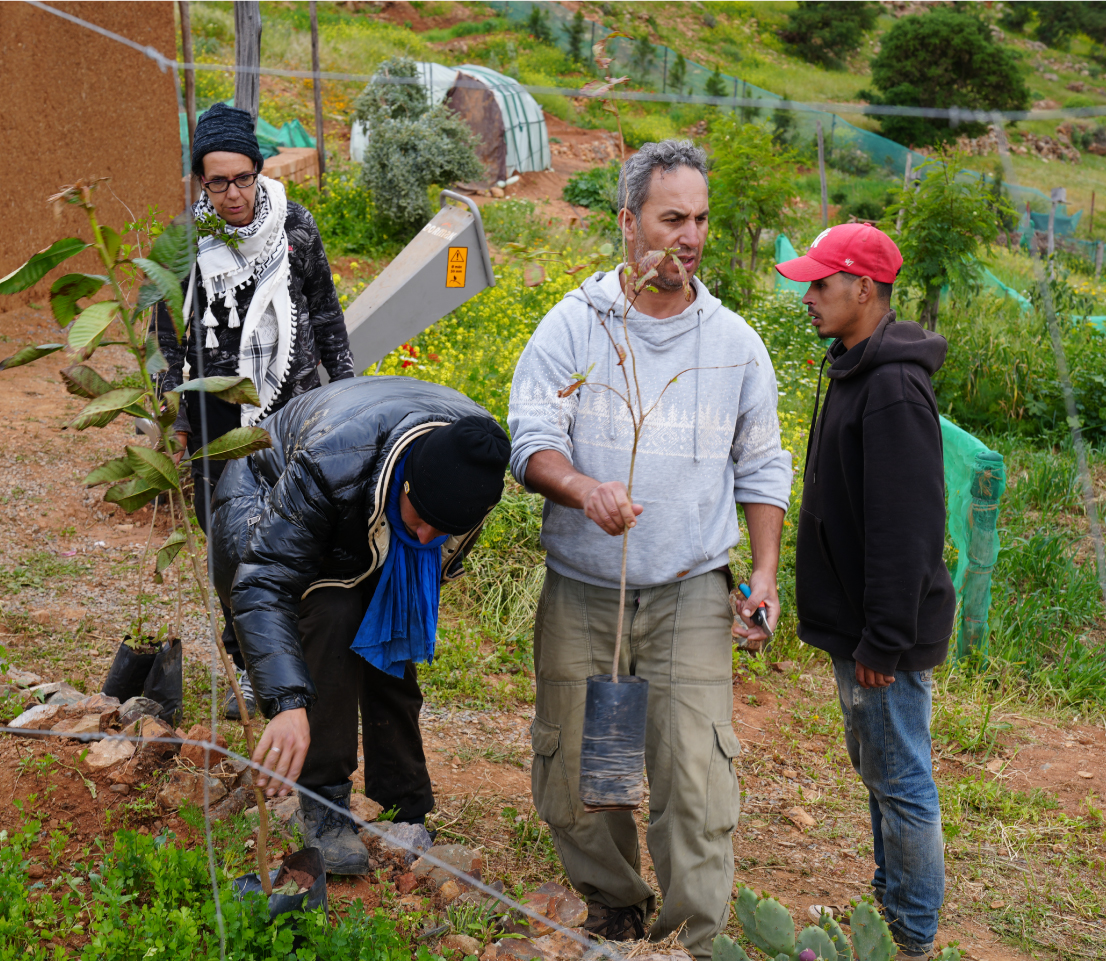
At ABA, the work is also about what happens underneath our feet and around the plants: rebuilding soil, slowing erosion, creating shade, protecting moisture and bringing diversity back into the landscape.
Terraces hold the slopes. Mulch protects the soil. Trees create shelter and microclimates. Plants cover and feed the ground. Different species are observed together, not only for what they produce, but for what they contribute to the life of the whole system.
The aim is not to create an isolated green patch in a dry landscape.
It is to explore whether a living system can gradually rebuild itself when the right conditions are given time, care and attention.
At ABA, productivity is therefore only part of the question.
How do we create the conditions for life to return — and stay?
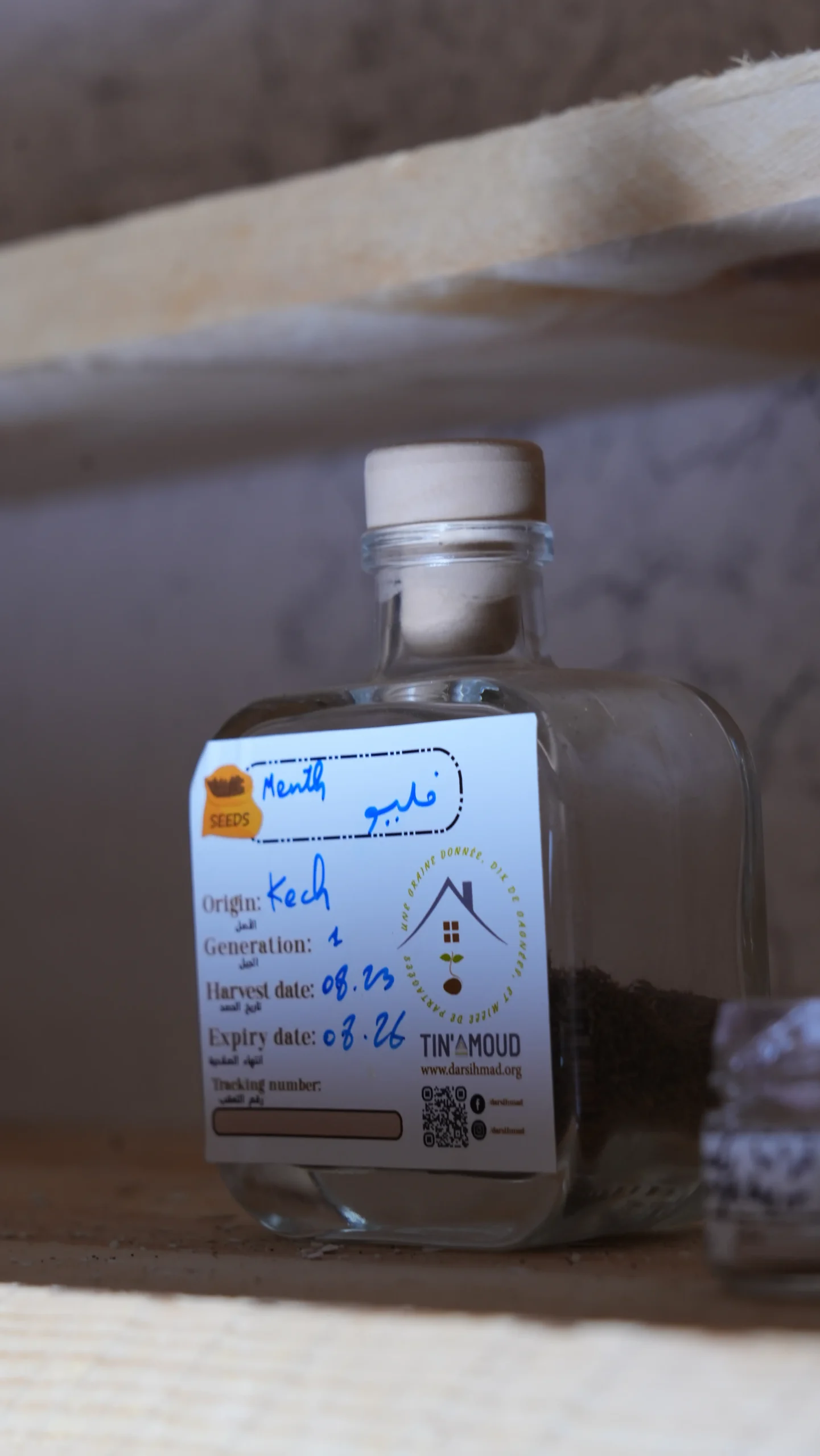
A seed carries more than the promise of a plant.
It carries memory: of a place, a season, a taste, a way of cultivating, and generations of people learning which varieties could survive, when to plant them, how to save them, and how to adapt to a changing landscape.
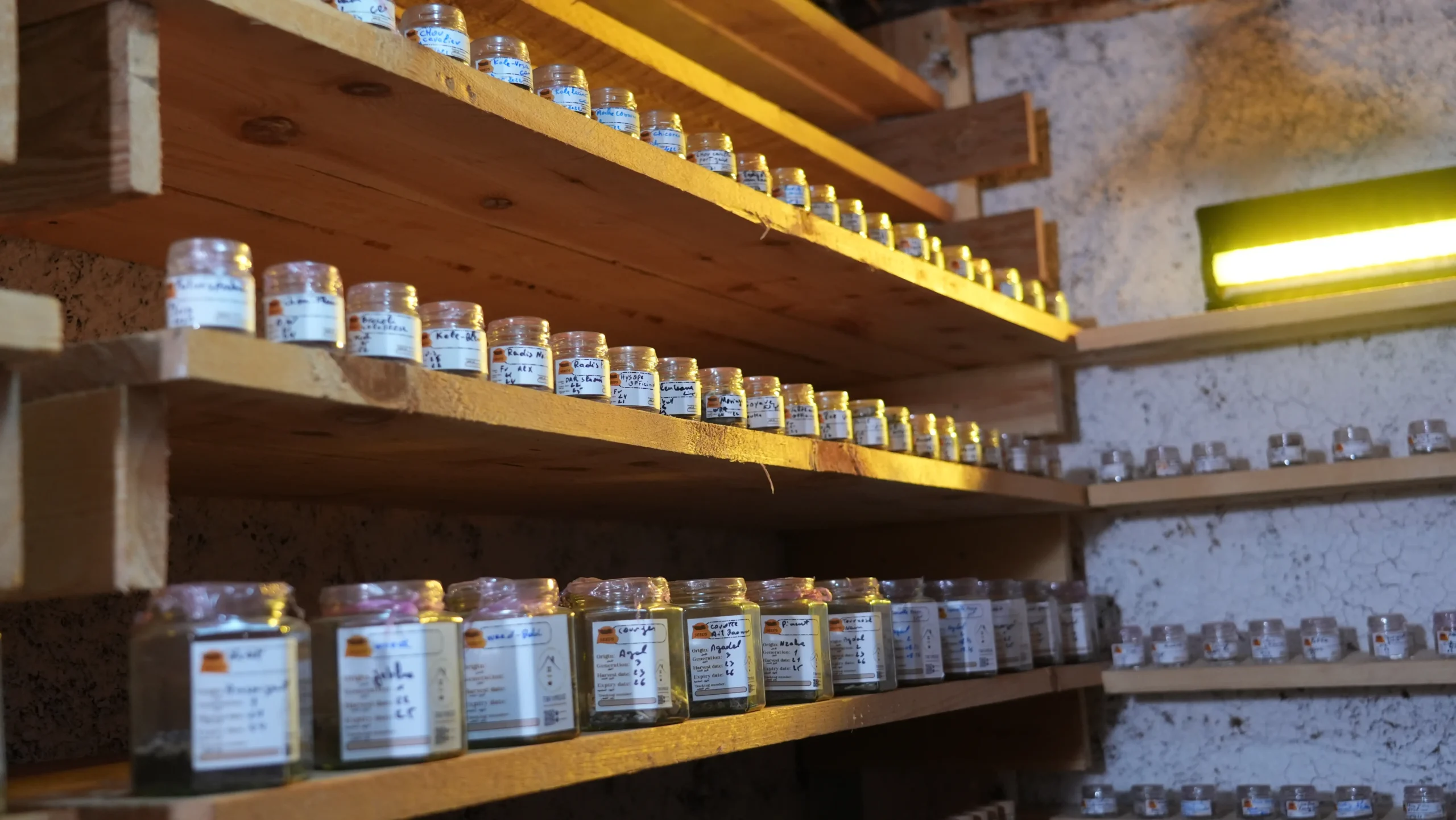
Tin’Amoud — literally, “at the seed’s,” evoking being the seed’s guest — is ABA’s seed library. The name expresses a different relationship with the living world: rather than placing ourselves at the centre, we enter the seed’s world as learners and guests.
In the Anti-Atlas, much of this knowledge has travelled with people — and some of it has become harder to pass on as migration, drought and changing livelihoods have transformed rural life.
Seeds are collected from oases, mountains and villages, carefully selected, documented through their stories and preserved. But preservation is only part of the purpose. Seeds are meant to return to the soil, to be tested, shared and cultivated.
At ABA, Tin’Amoud brings together memory, biodiversity, ancestral knowledge and experimentation.
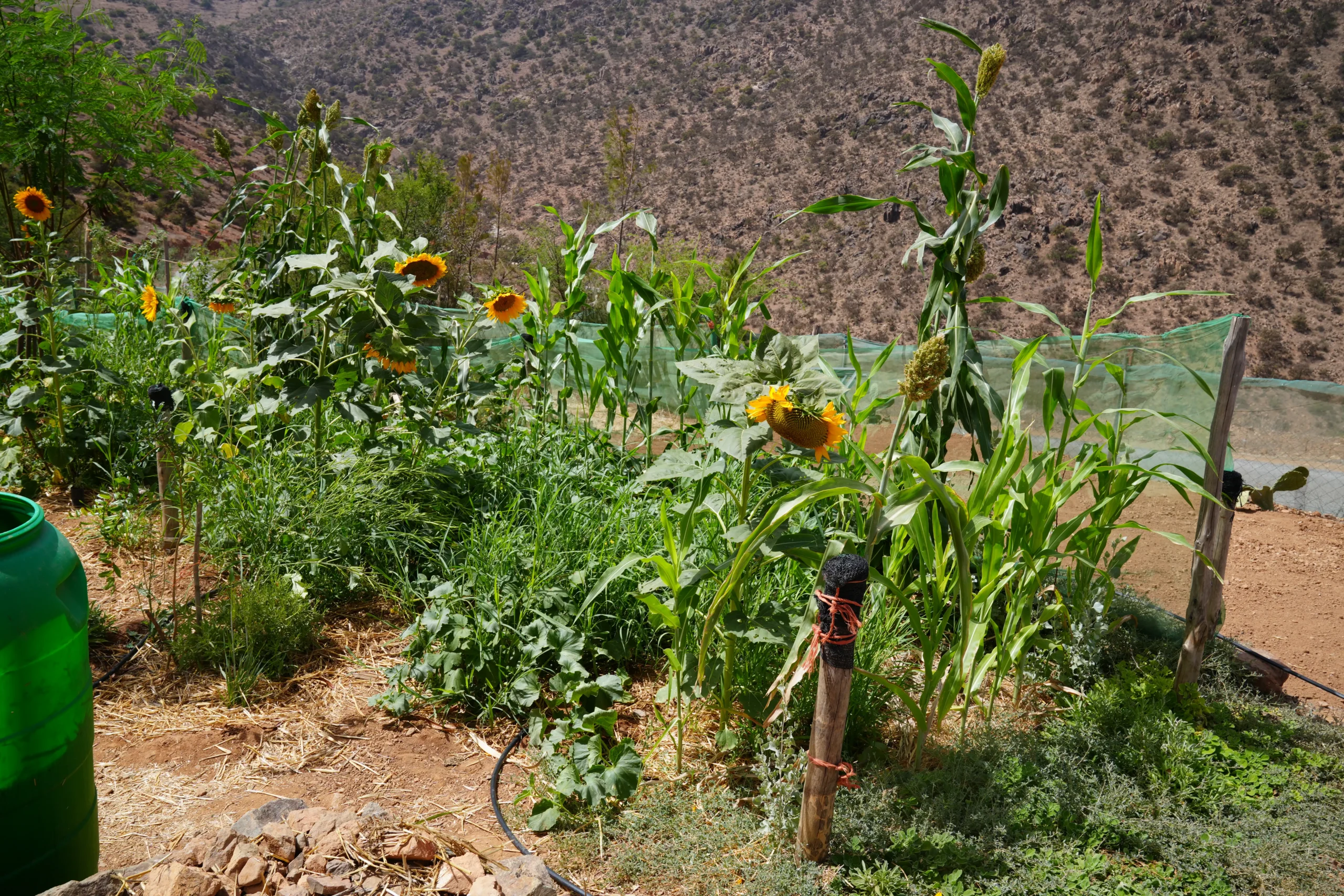
ABA is a place for trying things out.
What grows here? What survives the wind? Which plants need less water? What helps rebuild the soil? Which seeds adapt? What combinations create better conditions for life?
Some answers emerge quickly, others are taking years, while other experiments have failed.
That is not a problem to hide. It is part of the work.
We observe, compare, adapt and try again — bringing together scientific knowledge, local experience and what the land itself teaches us.
ABA is therefore not a model farm with a recipe to reproduce.
It is a living laboratory where knowledge is made through practice.
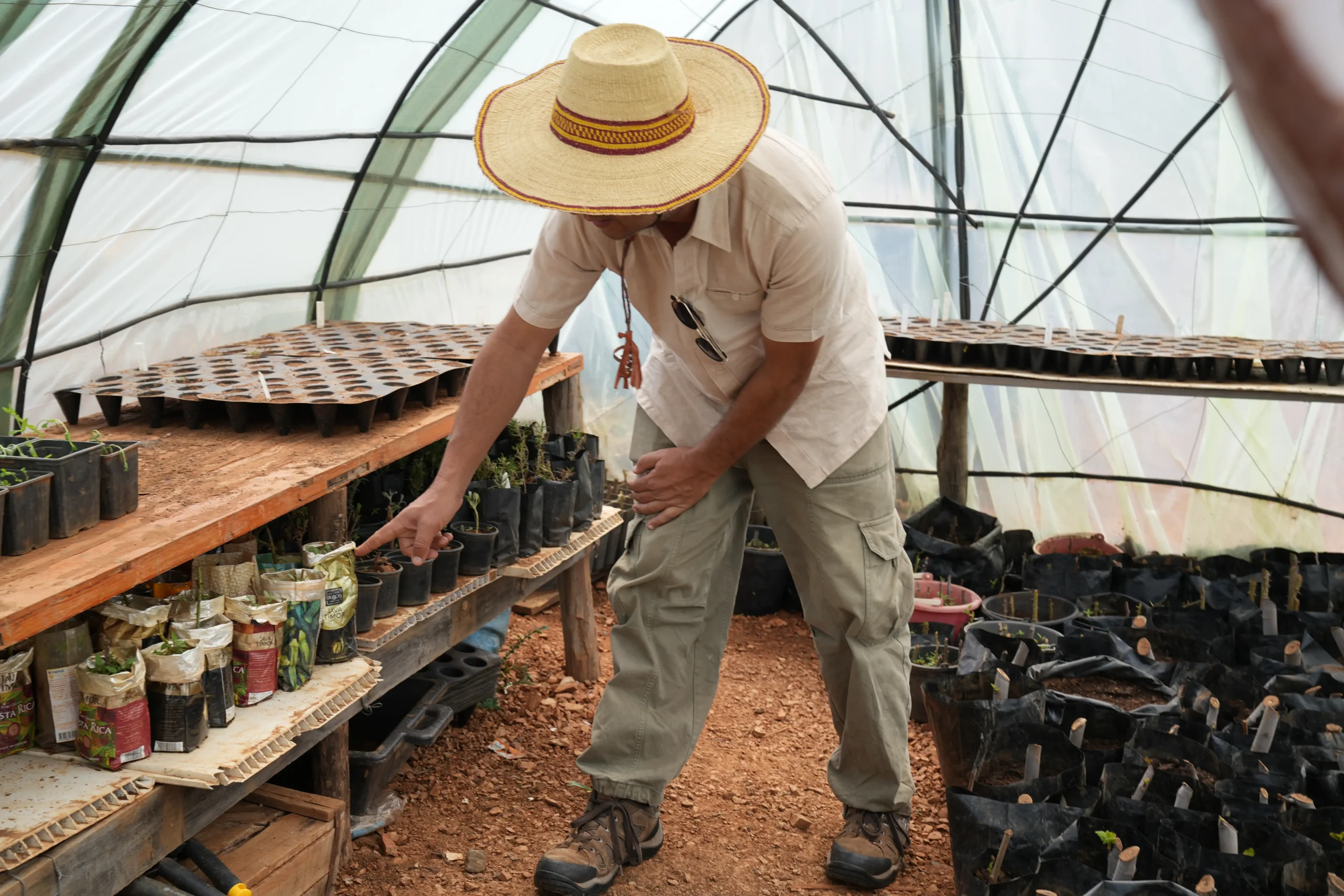
A field can teach us something. But knowledge becomes useful when it moves beyond the field.
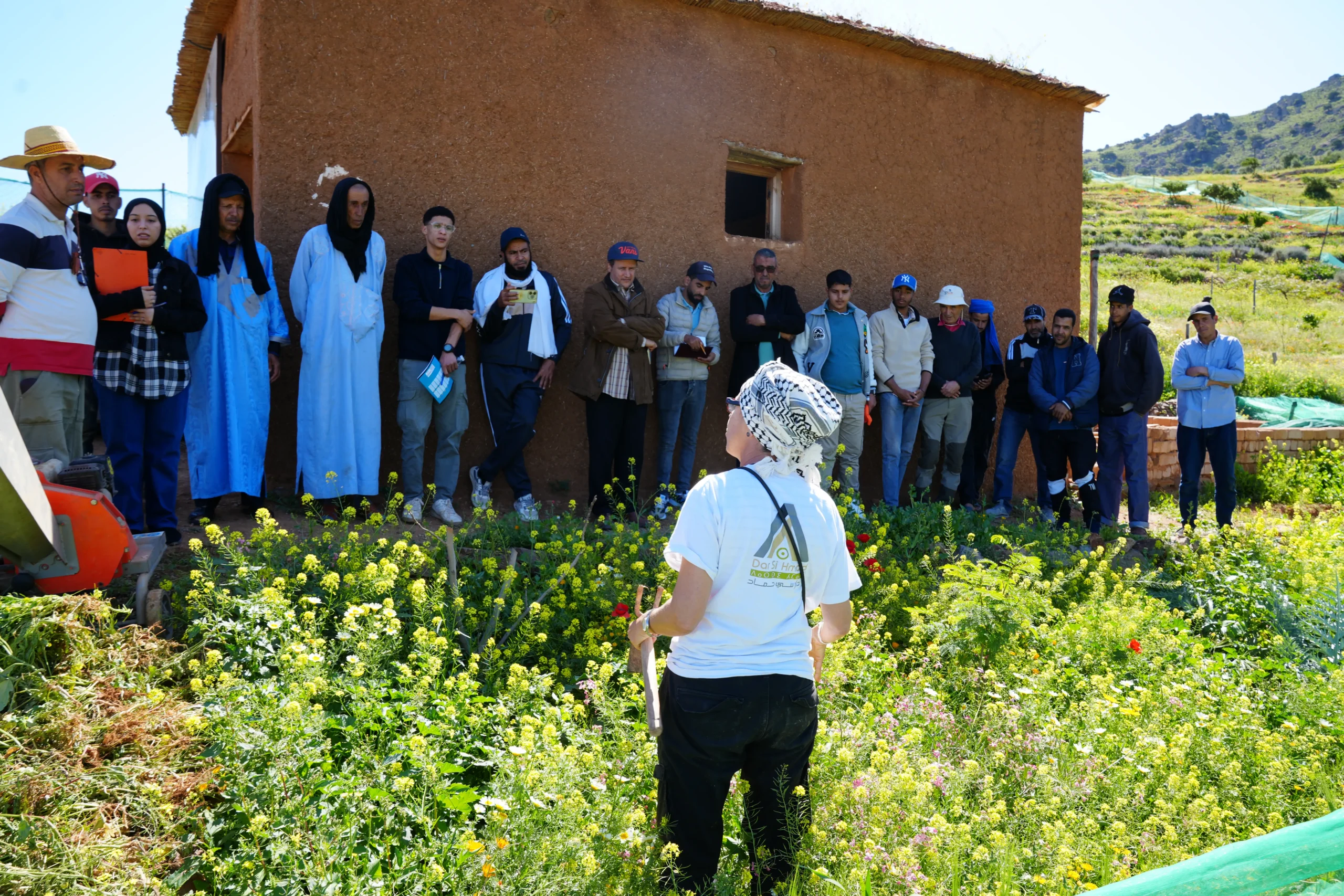
ABA is a place where farmers, students, children, researchers, volunteers, villagers, practitioners and visitors can come together to observe, work, question and exchange.
Here, learning is not one-way. A workshop can bring new techniques. A farmer can bring generations of experience. A seed can reveal what a landscape once supported. An experiment can show what might work tomorrow.
This is why ABA is more than a farm.
It is a place for learning with the land and learning from one another — where different forms of knowledge can meet, be tested and be carried elsewhere.
ABA is a micro-experiment.
We are not trying to create a perfect oasis, or claim that one farm can answer the challenges of desertification and water scarcity.
We are asking a smaller, more practical question:
In a landscape where water is becoming scarce and dryness is advancing, what other ways of living and growing might still be possible?
The pressures facing drylands are no longer distant.
Water is becoming scarcer. Soils are degrading. Biodiversity is disappearing. People are leaving landscapes that can no longer sustain the lives they once supported.
There will be no single answer to this.
At Dar Si Hmad, we believe that part of the work is to make possibilities visible — to experiment with what is available, to learn from what has worked before, and to create spaces where new approaches can be tested.
ABA is one small piece of that work.
A piece of land.
A source of water.
Tin’Amoud, keeping seeds and their memories alive.
Knowledge brought together.
Experiments that may succeed or fail.
Together, they allow us to ask a question that is becoming increasingly urgent:
In a drying world, what other ways of living with the land can we still make possible?
We don't have the answer.
We are creating places where possibilities can be seen, experienced and shared — so that others can be inspired to find their own.
ABA is small. Its significance is not measured in hectares.
It is a place where a non-profit organization, farmers, researchers, practitioners, elders, young people and partners can come together to ask a question that is becoming urgent everywhere:
How will we grow food, sustain livelihoods and care for land in a hotter, drier world?